
The Paris 2024 Olympics present a once-in-a-generation photography opportunity, but capturing stunning images requires the right gear and preparation. As photographers worldwide converge on the French capital, demand for specialized equipment will skyrocket. This comprehensive guide details the essential photography gear you need to book now before it sells out, ensuring you’re ready to document history in the making.
Essential Camera Bodies for Olympic Photography
The camera body is the engine of your Olympic photography operation. While lenses define your field of view, the camera dictates whether you can capture the decisive moment at all. For the Paris 2024 Games, the demands are extreme: athletes moving at blistering speeds, unpredictable lighting in indoor venues and night events, and the absolute need for reliability. Choosing the right body is not about preference; it’s about meeting non-negotiable technical requirements.
The key requirements for an Olympic-ready camera body are interlinked. First, high-speed continuous shooting is mandatory. You need a camera that can sustain 15 frames per second (fps) or higher with full autofocus and autoexposure engagement. This burst rate ensures you capture the exact moment a sprinter’s foot crosses the line or a gymnast’s perfect handstand. Second, an advanced autofocus system is what separates great cameras from viable ones. You need deep, intelligent tracking that can lock onto an athlete’s eye or face and maintain that lock as they move erratically across the frame, even with obstructions. Finally, exceptional low-light performance is critical for indoor sports like boxing, fencing, and gymnastics, as well as evening events. High ISO capabilities with minimal noise allow for faster shutter speeds in challenging light.
Specific models that excel in this arena are predominantly mirrorless, as the technology has surpassed DSLRs for action. The Canon EOS R3 stands out with its 30 fps electronic shutter, pre-capture function, and legendary eye-control AF. The Nikon Z 9 (and its smaller sibling, the Z 8) offers a staggering 120 fps capture rate in a reduced resolution mode, completely blackout-free shooting, and robust 3D tracking. For Sony shooters, the A1 combines high resolution with 30 fps speed, while the A9 III is the pure speed king with its global shutter, eliminating rolling distortion entirely for sports like cycling or tennis. These cameras will sell out for three reasons: a final wave of professional upgrades before the Games, a surge in rental house demand, and supply chain constraints that cannot react quickly to such a concentrated, global spike in demand.
This leads to the crucial point of backup camera considerations. Relying on a single body for professional Olympic coverage is a recipe for disaster. Mechanical failure, accidental damage, or even a dead pixel cluster could end your assignment. Professionals typically carry at least two identical bodies or a primary and a very similar secondary model. This allows for immediate redundancy and ensures muscle memory and control layouts remain consistent in high-pressure situations. Your backup should not be a lesser camera; it must be capable of delivering the same client-ready images if your primary fails during a gold-medal final. Pairing, for example, a Canon R3 with an R5, or a Nikon Z 9 with a Z 8, provides that security. The investment is significant, but it pales in comparison to the cost of missing a historic Olympic moment due to equipment failure.
Olympic Lens Selection and Focal Length Strategy
Having secured the high-performance camera bodies discussed previously, your lens selection becomes the critical factor determining whether you capture fleeting moments or miss them entirely. The Olympics demand a strategic approach to focal lengths, balancing the need to bring distant action close with the versatility to adapt to unpredictable scenarios.
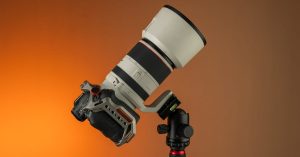
For the vast majority of Olympic action, telephoto lenses are non-negotiable. From the back rows of the Stade de France to the opposite side of the swimming pool, you’ll need serious reach. Consider a minimum of 400mm as your workhorse focal length, with 500mm and 600mm being the gold standards for field sports and athletics. Aperture is equally crucial; an f/2.8 or f/4 maximum aperture is essential for isolating subjects with shallow depth-of-field, enabling faster shutter speeds in variable light, and ensuring your camera’s autofocus system operates at peak sensitivity. A 400mm f/2.8 or a 600mm f/4 are the quintessential Olympic primes.
The debate between zoom vs prime lenses hinges on your shooting position and sport. Prime lenses (like 400mm f/2.8, 600mm f/4) offer superior optical quality and wider apertures, ideal for fixed positions where the action comes to you, such as the finish line or a gymnastics apparatus. Zoom lenses, particularly a 70-200mm f/2.8 and a 100-400mm or 200-400mm f/4, provide indispensable flexibility when your vantage point is variable or you need to quickly recompose, perfect for cycling road races or venue transitions.
Specialized lenses for specific sports can make or break your coverage. For swimming, a 70-200mm f/2.8 is often perfect from poolside, capturing swimmers in adjacent lanes with crisp detail. Gymnastics and indoor arenas benefit from fast primes (85mm f/1.4, 135mm f/1.8) for artistic shots under challenging light, paired with a 70-200mm for wider views. Track and field requires a two-body setup: a long prime (400mm f/2.8) for field events and sprints, and a fast zoom (70-200mm f/2.8) for ceremonies and wider track views. For the cycling time trials or marathon, a 100-400mm zoom offers the ideal range to compress perspective and follow approaching athletes.
Don’t neglect wide-angle options. A 16-35mm f/2.8 or a fast 24mm prime is essential for capturing the grandeur of the venues, the atmosphere of the crowds, and environmental portraits of athletes that place them in the iconic context of Paris. These lenses will be vital for storytelling beyond the pure action.
Given the unprecedented demand, the lens rental market will face extreme pressure in the months leading up to the Games. Every professional, agency, and serious enthusiast will be seeking the same exotic telephotos and fast zooms. Rental houses in Europe will see inventory evaporate. Booking your lens kit now—ideally six months in advance—is not an overreaction; it’s a necessity. Securing your 400mm f/2.8 and 70-200mm f/2.8 rentals early guarantees you have the optical tools to match the capability of your camera body, ensuring you’re equipped to capture history.
Paris Olympic Venue Photography Challenges
Having selected the perfect lenses for the action, you must now prepare to deploy them in the uniquely challenging environments of the Paris 2024 venues. This Olympics is unlike any other, with events spread across iconic Parisian locations that offer breathtaking backdrops but present significant logistical and technical hurdles.
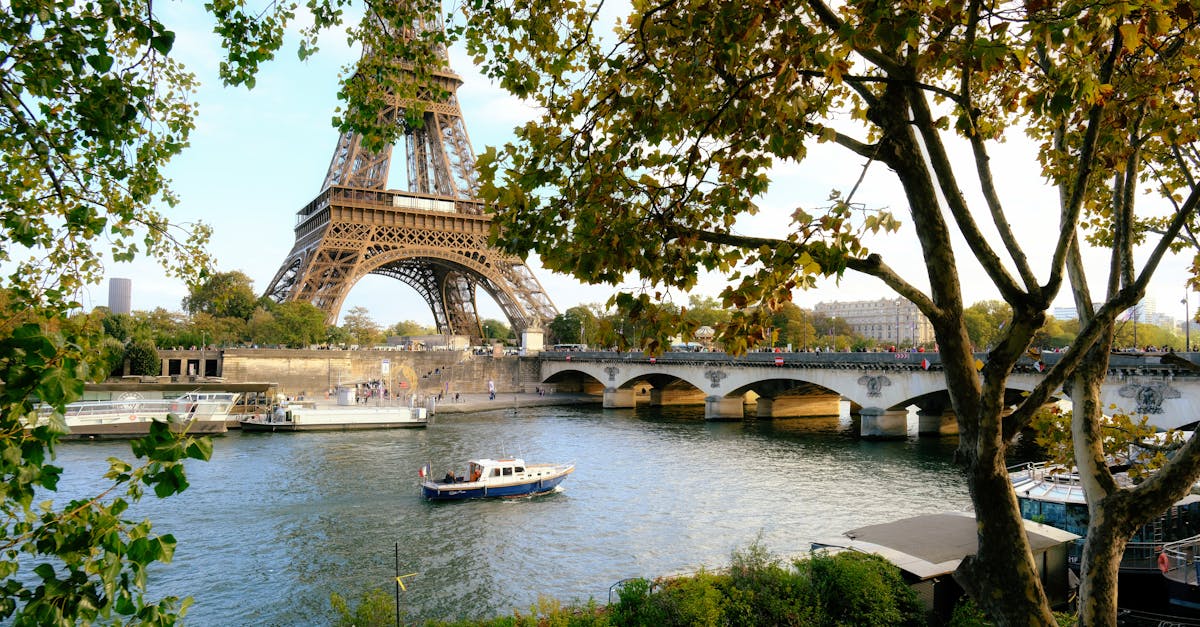
The integration of iconic Paris locations is a double-edged sword. Shooting beach volleyball at the Eiffel Tower or the triathlon along the Seine provides unparalleled scenic frames, but these historic sites were not built as sporting arenas. You’ll be contending with fixed, often distant shooting positions, obstructive historic architecture, and crowds that dwarf those of a dedicated stadium. The marathon course through the city and the opening ceremony along the river will require immense scouting and an understanding of urban light and shadow. The Tuileries Garden, site of the public Olympic cauldron, will be perpetually packed, demanding a strategy for capturing clean shots amidst the throngs.
Lighting conditions will vary wildly. The gleaming new indoor arenas of Paris La Défense Arena or the Adidas Arena will have consistent, bright artificial light, allowing for faster shutter speeds. In stark contrast, historic venues like the Grand Palais for fencing or the Château de Versailles for equestrian events feature vast, glass-domed ceilings that create beautiful but challenging mixed lighting and potential for extreme contrast. Evening events at outdoor venues, like athletics at Stade de France, will see you transition from bright sunset to fully artificial stadium lighting, requiring constant adjustment of white balance and exposure.
Understanding access restrictions is non-negotiable. Accredited photographers will have designated positions (often fixed and monopod-only), while the general public faces severe limitations on professional-sized gear. Even with accreditation, moving between venues in Paris’s dense urban fabric is time-consuming. Research the specific photo positions for your assigned sports now; some may offer only oblique angles to the action, directly influencing the focal length strategy discussed previously.
Parisian summer weather is notoriously fickle. Expect intense sun and heatwaves that cause heat haze, degrading telephoto image quality, followed rapidly by sudden, heavy thunderstorms. This volatility makes equipment protection paramount. A comprehensive kit must include rain covers for your camera and long lenses (think dedicated sleeves, not just plastic bags), robust lens hoods to guard against glare and droplets, and ample silica gel packs to combat humidity when moving between scorching outdoors and air-conditioned indoor venues. A lightweight, waterproof cover for your entire gear bag is essential for navigating between metro stops and venues during a downpour.
Maximize opportunities by arriving early to scout sightlines, especially at temporary urban venues. Use the city’s iconic elements strategically—a flag framed by a historic archway, a cyclist blurring past a café—to tell a richer story. Your adaptability to these unique venue challenges will separate standard action shots from truly iconic Olympic photographs.
Support Gear and Accessories You Can’t Forget
Having conquered the venue challenges outlined previously, your success at the Paris Olympics hinges on the unsung heroes of photography: your support gear. This ecosystem of accessories determines whether you capture history or miss it due to a dead battery or full memory card. It’s the logistical backbone that allows your cameras to perform.
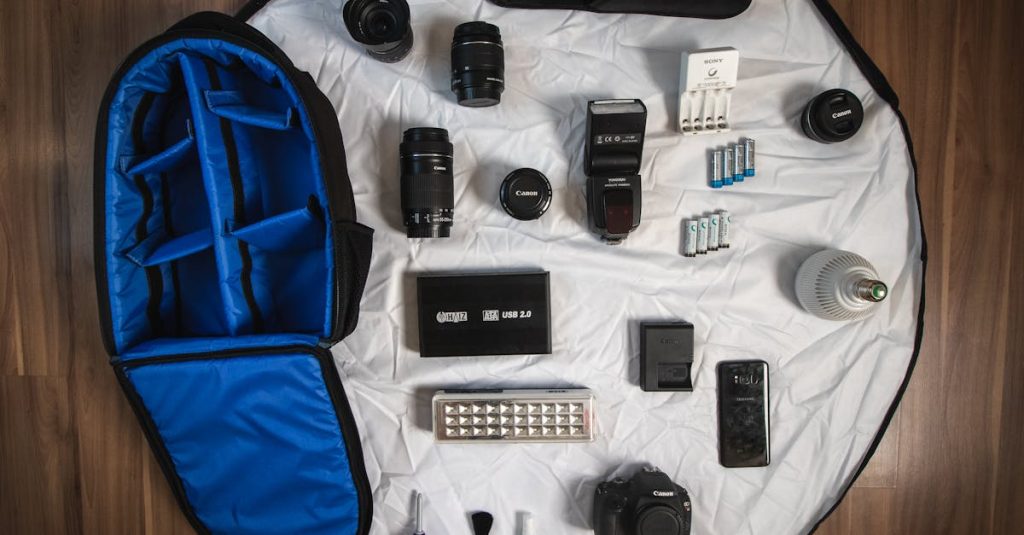
For stability, especially during long sessions like ceremonies or nighttime events, a monopod is your primary tool. It offers crucial support for heavy telephoto lenses while allowing quick panning to follow action. Look for a carbon fiber model like the Gitzo Series 4 or Really Right Stuff for the best strength-to-weight ratio. A compact, sturdy tripod is also essential for wide-angle venue shots, time-lapses, or if you’re stationed in a fixed position. Given Parisian crowds and transport, prioritize portability; a travel tripod that folds to under 50cm is ideal. Remember, many venues will prohibit full tripod use in active shooting positions, so check accreditation rules.
Your memory card strategy is a marathon, not a sprint. With high-resolution cameras shooting bursts at 20+ frames per second, you need both immense capacity and blistering write speeds to avoid buffer lock during peak action. For a typical day, carry a minimum of 1-2 terabytes of storage across multiple cards. Rely on CFexpress Type B or the fastest SD UHS-II cards your cameras support. Brands like ProGrade Digital, Sony Tough, or SanDisk Extreme PRO are proven. Never keep all your eggs in one basket; use a high-speed portable SSD like a Samsung T7 Shield for daily backups, and a cloud sync when possible at your hotel.
Battery anxiety is real. For mirrorless cameras, plan on 6-8 batteries per body for a full day. Use dual-slot chargers to power up pairs simultaneously. An external power solution, like a USB-C PD power bank that can charge your camera while shooting, can be a game-changer for long, static events. Ensure all your gear—camera, laptop, phone, accessories—uses USB-C to simplify your charging hub. A multi-port, high-wattage GaN charger and a set of international plug adapters are non-negotiable for hotel charging logistics.
Navigating the Metro and packed venues demands a smart bag strategy. A backpack like a Think Tank Photo Airport series or a MindShift Gear Rotation is essential for hands-free mobility and protecting gear on the go. It must be comfortable, lockable, and within airline carry-on size limits. For immediate access at venues, a modular belt system or a sling bag that holds extra lenses and batteries is invaluable, allowing you to work from a smaller kit without returning to a main bag.
Finally, communication is critical. A simple, unlocked global smartphone with a local French SIM card ensures you can file images, receive assignments, and coordinate with editors or teammates. A compact two-way radio, if coordinating with an assistant, can be vital in loud stadiums where phones are impractical. Pair this with noise-isolating earbuds to listen for event cues while protecting your hearing from the roar of the crowd. This support network, though unseen in your final images, is what enables you to capture them.
Booking Strategy and Timeline for Olympic Gear
With your core equipment and support gear planned from the previous chapter, the next critical battle is securing it. For the Paris 2024 Olympics, your photography success begins not in July, but with a meticulous booking strategy executed months in advance. High-demand gear will vanish from rental houses and retailers, making timing as crucial as your camera settings.
The critical booking timeline is non-negotiable. For premium super-telephoto lenses (400mm f/2.8, 600mm f/4) and high-end camera bodies favored by sports pros, you must secure reservations 6 to 9 months before the Games. These items have limited inventory globally. By 4 months out (March 2024), the wider pool of high-speed telephoto zooms (100-400mm, 150-600mm) and professional-grade bodies begins drying up. At the 2-month mark (May 2024), your options will be severely limited to consumer-grade equipment, and prices for remaining gear will surge. Consider this: rental houses allocate inventory for the Olympics a full year in advance.
This leads to the rental vs purchase decision. Rent if you need cutting-edge or specialized gear (like an 800mm prime) you won’t use regularly, or to supplement your kit without massive capital outlay. Purchase if you foresee continuous use post-Olympics, or if the rental cost for the entire preparation and event period approaches 30-40% of the item’s retail value. For most, a hybrid approach is wise: own your core bodies and standard zooms, rent the exotic super-telephotos.
Insurance considerations are paramount. Your homeowner’s policy likely won’t cover professional use abroad. You need separate equipment insurance that covers theft, accidental damage, and loss worldwide. For rentals, purchase the rental company’s damage waiver, but understand it may not cover theft. Also, verify your travel insurance covers gear as high-value items; you may need to list serial numbers. Never check insured gear in airline luggage—always carry it on.
Shipping logistics require careful planning. If renting internationally, coordinate with the rental company for direct shipping to your Paris accommodation. Ship at least 2-3 weeks before your arrival, using a tracked, insured courier with required customs documentation (ATA Carnet for professional gear to avoid duties). For personal gear, carry it with you. Airlines have limits, so distribute weight across bags and be prepared to argue for professional courtesy at check-in.
Always have a backup plan. Identify secondary rental sources in Paris or nearby European cities. Know the model equivalents across brands (e.g., if a Canon 400mm f/2.8 is gone, could you work with a Sony 400mm f/2.8?). Build a “Plan B” kit list using more readily available lenses, perhaps combining a 300mm f/2.8 with a teleconverter.
Month-by-Month Preparation Checklist:
- September 2023 – January 2024: Finalize gear list. Book super-telephotos and flagship bodies from reputable rental houses. Secure equipment insurance.
- February – March 2024: Book all other lenses, secondary bodies, and specialized support gear (gimbals, etc.). Confirm reservations in writing.
- April 2024: Arrange shipping logistics or plan carry-on strategy. Apply for ATA Carnet if shipping pro gear. Test all your owned equipment thoroughly.
- May 2024: Finalize backup rental options. Create a detailed packing list with serial numbers for insurance. Confirm delivery dates/tracking for shipped items.
- June 2024: Receive and test all rented gear locally if possible. Pack systematically. Double-check travel and import documents.
- July 2024: Arrive in Paris with gear secured. Have local rental contacts on speed dial just in case. Then, focus on the action.