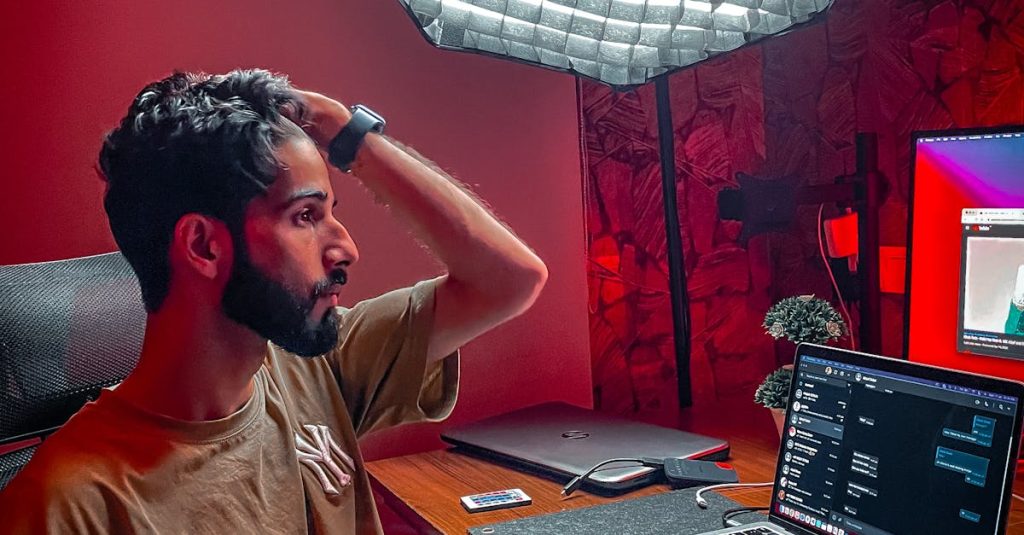

AI face enhancement tools are transforming portrait photography by using advanced computer vision algorithms to automatically brighten eyes and enhance smiles. These intelligent systems analyze facial features with remarkable precision, applying targeted improvements that preserve natural appearance while elevating photo quality. This technology represents a significant leap forward in digital image processing.
The Evolution of Computer Vision Technology
The journey from simple image scanning to intelligent face enhancement began not with pixels, but with painstaking manual labor. In the 1960s, researchers like Woody Bledsoe, Helen Chan Wolf, and Charles Bisson pioneered the first facial recognition systems. Their method was remarkably analog: an operator would manually mark the coordinates of key facial features—pupil centers, mouth corners, nose tip—from a photograph onto a RAND tablet. These coordinates, forming a crude geometric signature, were then stored. Recognition involved mathematically comparing these coordinate sets, a process entirely dependent on human precision for the initial “feature detection.”
This manual era highlighted the core challenge: automating the understanding of visual data. The 1970s and 80s saw the field of computer vision establish its mathematical bedrock. The development of edge detection algorithms, like the Sobel and Canny operators, provided machines with a fundamental tool to perceive object boundaries by identifying sharp intensity changes. Concurrently, scale-space theory offered a framework to analyze images at multiple resolutions, crucial for identifying features regardless of distance or image size. These were not yet “intelligent” systems, but they provided the essential grammar for parsing images.
The transition from coordinate plotting to automated feature extraction was the critical bridge. Instead of a human identifying an eye corner, algorithms began to be designed to find these points by looking for specific patterns of light and shadow, or by matching pre-defined templates of features like eyes or noses against the image data. This shift from holistic manual measurement to localized, automated detection laid the indispensable groundwork. It moved the problem from “how do we mathematically describe a face a human has annotated?” to “how can a machine itself find and interpret the structures of a face?”—the very question that would eventually empower AI to not just find, but artistically enhance, a smile or the sparkle in an eye.
Understanding Facial Feature Detection Algorithms
Building upon the foundational computer vision techniques, modern AI face enhancement begins with the critical task of facial feature detection. This process involves algorithms that automatically locate and map the precise geometry of a face. The primary method used today is facial landmark detection, where an AI model is trained to identify and place dozens of key points, or landmarks, on a facial image. These typically include the corners of each eye, points along the eyebrows, the outline of the nose bridge and nostrils, the boundaries of the lips, and the contour of the jawline.
The detection process employs a holistic approach, analyzing the entire facial region simultaneously, as opposed to older feature-based methods that searched for individual parts in isolation. A convolutional neural network scans the image, learning to recognize patterns and spatial relationships. It doesn’t just find an eye; it understands that an eye exists within a certain expected distance from another eye and below an eyebrow. By measuring the distances and angles between these detected landmarks, the system constructs a detailed geometric mesh or map of the facial structure. This map defines the unique proportions and layout of that specific face.
To ensure robustness, these algorithms are trained on massive datasets containing immense variation. They learn to normalize for different lighting conditions by focusing on relative contrast and texture rather than absolute pixel brightness. They handle varied poses (like a turned head) by understanding the three-dimensional projections of facial features and how their two-dimensional relationships change with perspective. Crucially, they must also be invariant to expressions—a smile stretches the distance between mouth landmarks, but the algorithm must still correctly identify those points’ new locations. This accurate, adaptive detection forms the essential blueprint that subsequent enhancement networks use to apply targeted, natural-looking improvements to eyes, smiles, and skin.
Deep Learning Architectures for Image Enhancement
Building upon the precise facial landmark detection described previously, the raw coordinates of eyes and smiles are merely a map. The true artistry of enhancement lies in the deep learning architectures that interpret and transform these features. At the core of modern AI face enhancement are convolutional neural networks (CNNs), engineered to process visual data with remarkable sophistication. These networks ingest a facial image and pass it through dozens, sometimes hundreds, of sequential layers. Early layers act like simple edge detectors, identifying basic contours. As the data flows deeper, subsequent layers combine these primitive features into increasingly complex constructs—recognizing the circular pattern of an iris, the subtle shadow defining a cupid’s bow, or the specific wrinkle patterns of a genuine smile versus a neutral lip line.
Crucially, not all pixels in a portrait are equally important for enhancement. This is where attention mechanisms become vital. These are sub-networks that learn to dynamically weight the significance of different image regions. When tasked with brightening eyes, the architecture learns to focus its computational “attention” on the orbital region, pupil, and iris, largely ignoring the forehead or ears. Similarly, for smile enhancement, attention maps highlight the lips, perioral muscles, and even adjacent cheek areas to ensure a natural, context-aware adjustment that considers how a smile affects the entire lower face.
These capabilities are not pre-programmed but learned from vast, diverse datasets containing millions of annotated facial images under every conceivable lighting condition and expression. By training on this spectrum, the CNN learns intrinsic patterns: how to differentiate the harsh shadows of overhead lighting from natural facial shading, or how to enhance a subtle, thoughtful smile differently than a broad, joyful grin. It internalizes the geometric and photometric relationships between features, allowing it to apply enhancements that are not uniform filters, but intelligent, localized adjustments that respect the unique topology and expression of each individual face, setting the stage for the generative power of GANs to take this refinement even further.
Generative Adversarial Networks in Portrait Enhancement
Building upon the foundational deep learning architectures, a particularly transformative class of models has emerged for creating enhancements that feel authentically photographic: Generative Adversarial Networks (GANs). Unlike standard CNNs that adjust existing pixels, GANs can generate entirely new, realistic image data. The core architecture is a competitive duel between two neural networks: the Generator, which creates enhanced versions of a portrait, and the Discriminator, which learns to distinguish between real, unedited photos and the Generator’s fakes. This adversarial, zero-sum game pushes the Generator to produce results so convincing they fool the Discriminator, leading to remarkably natural outputs.
Advanced architectures like StyleGAN have revolutionized this process for faces. Instead of manipulating a crude noise vector, StyleGAN allows for style-based generation, separating high-level attributes (like pose and smile) from stochastic details (like freckles and hair placement). This is pivotal for enhancement. When brightening eyes, the system doesn’t just overlay a white mask; it learns from vast datasets to generate plausible catchlights, adjust iris luminance, and enhance the surrounding eye area in harmony with the original lighting. For smile enhancement, it can subtly alter the curvature of the lips, generate realistic teeth texture, and even adjust the crinkling of the eyes, all while preserving the subject’s core identity.
This generative approach overcomes the rigid limitations of traditional filters, which often produce a plastic, “overcooked” look. By learning the underlying probability distribution of human faces from millions of examples, GANs understand what a naturally bright eye or an authentic smile should look like across countless variations. They synthesize enhancements that are coherent with the individual’s unique geometry and the scene’s lighting, achieving a level of subtlety and realism that marks a true revolution in automated portrait retouching.
Eye Brightening Technology and Techniques
Building upon the GAN-based foundation for realistic facial generation, AI-powered eye brightening represents a sophisticated application of targeted perceptual enhancement. Unlike broad adjustments that can wash out detail, these systems perform a precise anatomical analysis of the eye region. The algorithm first segments the sclera (the white), iris, and pupil, assessing each component’s luminance and color values relative to the overall face. It detects reflection patterns—distinguishing the vital catchlights that suggest life and depth from flat, unnatural glare caused by direct flash.
The enhancement process is a multi-layered operation. For a natural result, the AI applies selective exposure adjustments, primarily brightening the sclera to reduce redness or fatigue, while carefully preserving the intricate texture of the iris. Contrast is subtly enhanced between the iris and pupil to define the border, making the eye appear sharper and more focused. Crucially, the system preserves or even subtly enhances existing catchlights, as these reflections are key to a lively gaze. If none are present, advanced models can generate plausible, dimensionally accurate reflections based on the inferred light direction in the original portrait.
These tools are engineered to adapt intelligently to diverse conditions:
- Eye Color & Texture: Enhancement parameters are modulated for different iris pigments. Dark brown eyes may receive slightly more targeted brightening within the iris pattern, while light blue eyes might need more restraint to avoid an unnatural, over-saturated glow.
- Lighting Scenarios: In low-light images, the AI compensates for noise and color shift when brightening. In harsh, high-contrast light, it works to recover shadow detail around the eyes without amplifying highlights to a glaring degree.
The ultimate goal is not to replace the eye, but to computationally emulate the effect of perfect, flattering light falling upon it, ensuring the subject’s gaze remains authentic and engaging. This sets the stage for the equally nuanced task of smile enhancement, where expression analysis becomes paramount.
Smile Enhancement and Expression Analysis
Building upon the precise enhancements to the eyes, AI portrait tools apply equally sophisticated intelligence to the most expressive feature of all: the smile. Smile enhancement technology moves far beyond simple teeth whitening, employing advanced facial expression analysis to evaluate and refine a smile’s authenticity. Algorithms first perform a detailed deconstruction of the mouth region, measuring key metrics such as smile intensity through lip corner displacement, the curvature of the upper lip line, and the degree of tooth visibility. This analysis allows the system to classify the smile type—whether it’s a subtle closed-mouth grin, a joyful open-mouth laugh, or a nuanced asymmetrical smile—and tailor its approach accordingly.
The enhancement process is a ballet of subtle adjustments designed to amplify, not replace, the natural expression. For the smile itself, AI may gently increase the mouth’s curvature to suggest a more pronounced, yet believable, uplift. Tooth enhancement involves selective brightening and smoothing, carefully avoiding an artificial, chalk-white appearance by preserving natural shadows and subtle color variations. Lip texture and color can be subtly enriched to complement the enhanced teeth and overall skin tone. Crucially, the system’s core directive is to preserve the unique character of the original expression. It does this by working within the anatomical limits of the subject’s face, ensuring adjustments to asymmetry are minimal and sympathetic, often balancing the smile by mirroring its stronger side rather than forcing perfect symmetry. The result is a portrait where the subject’s genuine emotion is simply presented at its most radiant and engaging, seamlessly connecting the focused clarity of the eyes with the dynamic warmth of an enhanced smile.
Real-Time Processing and Mobile Applications
The seamless smile enhancements discussed previously would be of limited impact if they required minutes of cloud processing. The true revolution lies in bringing this professional-grade AI directly into the palm of your hand, operating in real-time both for editing and live previews. This demands a monumental engineering feat: running complex neural networks, once confined to powerful servers, on a smartphone’s constrained hardware. The key is aggressive optimization. Developers employ model compression techniques like pruning (removing insignificant neural connections) and quantization (reducing numerical precision of calculations), dramatically shrinking model size with minimal quality loss.
To achieve the fluidity of a live camera preview, these streamlined models leverage the phone’s specialized hardware. Hardware acceleration through the GPU (Graphics Processing Unit) or, increasingly, dedicated NPUs (Neural Processing Units) is critical. These chips are designed for the parallel computations inherent to AI, performing billions of operations per second while being remarkably power-efficient. This focus on efficiency is paramount; algorithms are optimized not just for speed but for battery conservation, using techniques like adaptive processing that applies full enhancement only when needed, such as upon a detected smile.
This creates a fundamental trade-off between speed and quality. A mobile app must balance the depth of enhancement—the subtlety of eye brightening or the naturalness of a smile adjustment—against the need for instantaneous feedback. Developers often implement tiered models: a ultra-lightweight network for the live view that applies core adjustments, and a more sophisticated, slightly slower model for the final “capture” or photo edit. This dual approach ensures the preview is useful and responsive, while the saved image receives the full, nuanced treatment. The result is an invisible layer of intelligence, working within the strict limits of mobile technology to deliver enhancements that feel both magical and immediate.
Ethical Considerations and Privacy Protection
The seamless, real-time enhancement of portraits on personal devices, while technologically impressive, raises profound ethical questions that the industry must confront. At the core lies the issue of informed consent and data privacy. When facial data is processed, even for benign beautification, questions arise about where this biometric information is sent, how it is stored, and who ultimately controls it. The potential for misuse, such as creating detailed facial maps for unauthorized surveillance or identity theft, is a significant concern. In response, a critical shift toward on-device processing has emerged. By running the AI models directly on the smartphone’s hardware, as discussed in mobile applications, the raw facial data never leaves the user’s device, drastically reducing privacy risks. Furthermore, advanced systems employ data anonymization and federated learning, where the AI learns from decentralized data patterns without ever accessing or storing individual images.
Beyond privacy, the technology challenges notions of authenticity and truth. The line between subtle enhancement and digital distortion is thin. There is a risk of promoting unrealistic beauty standards or creating misleading imagery that alters a person’s perceived identity. Ethical developers therefore prioritize algorithms that balance enhancement with the preservation of natural appearance, aiming to accentuate inherent features rather than replace them. This philosophy is increasingly guided by emerging industry standards and regulations, such as the EU’s AI Act and guidelines from bodies like the IEEE, which categorize certain uses of facial manipulation as high-risk. These frameworks push for transparency, requiring users to be clearly informed when an image has been algorithmically altered, ensuring the revolution in portrait photography does not come at the cost of ethical integrity or personal privacy.
Future Developments and Industry Applications
Building upon the robust ethical frameworks now guiding the technology, the trajectory of AI face enhancement is rapidly expanding beyond static correction into dynamic, interactive realms. The future lies in dimensionality and context-awareness. Emerging trends like real-time 3D facial modeling, powered by neural radiance fields (NeRFs) and similar AI, will enable photographers and creators to manipulate lighting, perspective, and expression in post-production with unprecedented fidelity, as if working with a digital sculpture. This seamlessly integrates with augmented reality, allowing for live, context-sensitive enhancements—imagine video conferencing software that not only brightens your eyes but also subtly adjusts your appearance to project optimal engagement under specific virtual lighting conditions.
Industry adoption is becoming pervasive and specialized. In professional photography, AI is evolving from a retouching aid to a collaborative creative engine, suggesting compositions based on subject emotion. Social media and communication platforms are moving towards personalized enhancement algorithms that learn individual preferences for a signature, consistent look across all video content. The entertainment industry leverages these tools for cost-effective pre-visualization and hyper-realistic digital doubles.
The next frontier is emotion-aware systems that go beyond aesthetics to modify subtle cues for intended communicative impact, potentially assisting in therapeutic settings or tailored learning environments. Crucially, this technology is not operating in isolation; it is becoming a core component of broader computer vision ecosystems, feeding into and learning from advancements in biometrics, human-computer interaction, and spatial computing. The ultimate impact will be a fundamental shift in digital communication, where our virtual presence is not merely enhanced but intelligently adapted to convey our authentic intent, bridging the gap between physical reality and digital expression with nuanced sophistication.