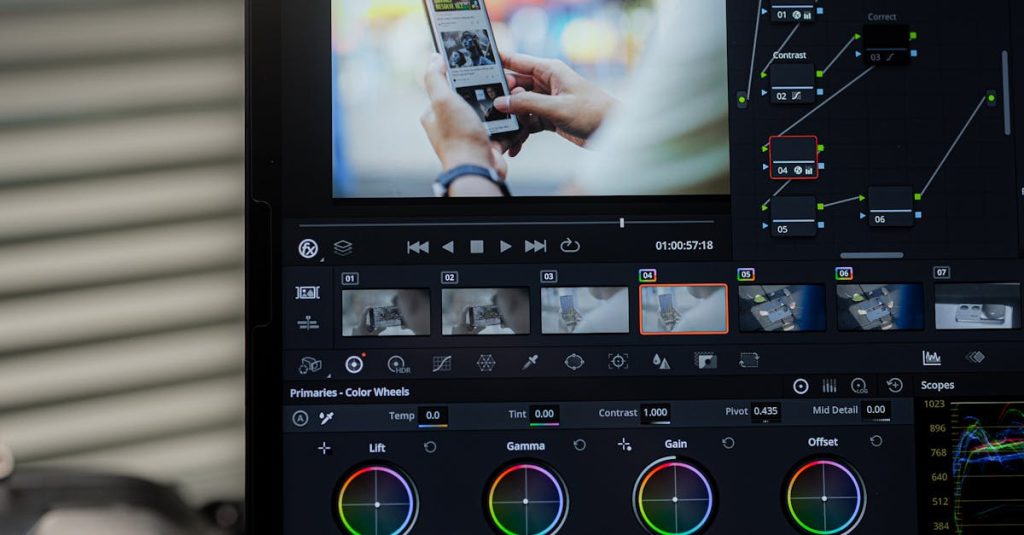

AI image compression represents a groundbreaking advancement in digital media technology. By leveraging sophisticated neural networks and machine learning algorithms, these tools can dramatically reduce file sizes while maintaining exceptional visual quality. This article explores how AI-powered compression works, its advantages over traditional methods, and practical applications for photographers, web developers, and content creators.
The Evolution of Image Compression Technology
The journey of image compression is a relentless pursuit of efficiency, driven by the need to store and transmit visual data within ever-tightening constraints. Early methods, like the simple Run-Length Encoding (RLE), exploited sequences of identical pixels but were ineffective for complex photographs. The true revolution arrived with the JPEG standard in 1992, built on the Discrete Cosine Transform (DCT). This mathematical technique converts 8×8 pixel blocks from the spatial domain into the frequency domain, separating coarse visual information (low frequencies) from fine detail (high frequencies). The core of JPEG’s lossy compression lies in quantization, where these frequency components are divided by a quantization matrix and rounded. This step aggressively discards high-frequency data, which human eyes are less sensitive to, but is irreversible and the primary source of artifacts like blocking and blurring.
Alongside quantization, JPEG employs chroma subsampling, leveraging the fact that the human visual system perceives color (chrominance) with less acuity than brightness (luminance). By reducing color resolution, often from 4:4:4 to 4:2:0, file size is halved with minimal perceived loss. Finally, entropy encoding algorithms like Huffman coding compress the resulting data stream losslessly by assigning shorter codes to more frequent values. In contrast, formats like PNG use purely lossless compression, employing sophisticated prediction and filtering followed by DEFLATE compression, preserving every pixel at the cost of larger files.
The limitations of these handcrafted, codec-based approaches became apparent with the rise of the web and mobile imaging. Newer formats like WebP and HEIF introduced more efficient prediction modes and block structures, with HEIF using the advanced HEVC (H.265) video compression technology for still images. While these represent incremental improvements, they remain bound by the same fundamental paradigm: applying a fixed set of mathematical and perceptual rules to all images. They cannot adapt their strategy to the specific semantic content of a picture, nor can they intelligently recover detail lost during quantization. This inherent rigidity creates a hard ceiling for the quality-to-size ratio, a barrier that traditional algorithms, despite their elegance, could not breach.
How Neural Networks Transform Compression
Building on the foundation of mathematical transforms and handcrafted codecs, AI-driven compression represents a paradigm shift. Instead of applying a fixed set of rules to every image, artificial intelligence, specifically deep neural networks, learns the very essence of visual information. This learning-based approach allows it to develop highly adaptive and perceptually intelligent compression strategies that fundamentally differ from the deterministic processes of JPEG or PNG.
At the heart of this revolution are Convolutional Neural Networks (CNNs), architectures inspired by the human visual cortex. A CNN doesn’t see an image as a mere grid of pixels; it analyzes it through a hierarchical series of filters. The initial layers detect simple, low-level features like edges, corners, and textures. As the data propagates deeper, the network synthesizes these into complex, high-level patterns—recognizing shapes, objects, and semantic content. This hierarchical analysis enables the AI to identify intricate spatial and contextual redundancies that traditional block-based DCT might fracture or miss entirely. It understands that a patch of blue sky or a textured brick wall contains predictable, repeating information that can be represented far more efficiently than a random assortment of pixels.
The system’s intelligence is forged during a rigorous training process on vast datasets containing millions of images. By being exposed to this immense variety of visual content, the neural network learns a sophisticated model of the visual world. Crucially, it learns to distinguish between perceptually critical information and data that the human eye is less sensitive to. This is where it surpasses simple quantization. The AI can prioritize fine details in a subject’s eyes while more aggressively compressing uniform background areas, all while maintaining a coherent, natural-looking result. It learns an optimal trade-off, not just between bits and distortion, but between bits and perceived quality, effectively embedding principles of human visual psychology directly into its compression algorithm.
AI Compression Architecture and Algorithms
Building upon the neural network foundation, modern AI compression systems employ specific, sophisticated architectures. The most prevalent framework is the encoder-decoder model, often implemented as an autoencoder. Here, the encoder network, typically using convolutional layers, transforms the input image into a compact, distilled latent representation—a highly compressed set of essential features. The decoder network then performs the inverse, reconstructing the image from this latent code. The system is trained end-to-end to minimize both the size of the latent representation and the distortion in the output.
More advanced variants enhance this core idea. Variational Autoencoders (VAEs) introduce a probabilistic twist, learning a distribution of latent codes. This allows for efficient entropy modeling, which is crucial for advanced arithmetic coding, and enables the generation of diverse, high-quality reconstructions. Meanwhile, Generative Adversarial Networks (GANs) bring a competitive dynamic. In compression, a generator (the decoder) tries to reconstruct realistic images, while a discriminator network tries to distinguish compressed-then-decompressed images from originals. This adversarial training pushes the system to preserve perceptually critical details that a simple pixel-distance loss might miss.
Central to all these architectures is rate-distortion optimization. The AI doesn’t just learn to compress; it learns to compress intelligently within a bit budget. The loss function during training balances two competing costs: the rate (the number of bits needed for the latent representation) and the distortion (the reconstruction error). Crucially, the model learns to allocate more bits to complex, visually salient regions like faces or textured areas, and fewer bits to smooth, less important backgrounds. This adaptive bit allocation, guided by the network’s understanding of visual importance, is what allows AI compressors to achieve dramatically smaller file sizes while maintaining fidelity where it matters most.
Quality Preservation Mechanisms
Building upon the architectural foundation of autoencoders and rate-distortion optimization, the true genius of AI-driven compression lies in its sophisticated quality preservation mechanisms. Unlike traditional codecs that minimize simple pixel-to-pixel error (like PSNR), AI systems employ perceptual loss functions. These functions are trained on vast datasets to understand what the human visual system actually perceives. They optimize for visual fidelity, not mathematical perfection, allowing the model to discard information invisible to the eye while meticulously preserving what matters most.
This perceptual intelligence enables the model to make nuanced decisions during compression. It identifies and prioritizes the preservation of critical visual elements: the sharp definition of edges, the intricate patterns in textures like fabric or foliage, and the smooth transitions in color gradients. A blurry edge or a muddy texture is immediately noticeable, while minor shifts in homogeneous areas are not. The AI allocates bits accordingly, protecting these high-frequency details even in aggressively compressed latent representations.
Furthermore, advanced systems adapt their strategy based on image semantics. For a portrait, the model learns to preserve fine details in the eyes, skin texture, and hair, while allowing more compression in the background. For landscapes, it maintains the complexity of natural textures and sky gradients. For text-heavy graphics or screenshots, it shifts focus to maintain legibility and sharp contrasts, preventing the blurring that plagues JPEGs. This contextual awareness ensures optimal quality for each image type.
The culmination of these mechanisms is the achievement of visually lossless compression. This does not mean the file is mathematically identical to the original, but that the differences are imperceptible under normal viewing conditions. The AI reconstructs the image from its compressed state by synthesizing plausible, visually accurate details based on its training, filling in gaps in a way that a simple decoder cannot. This allows for radical file size reduction—often 75-90%—while delivering an output that satisfies even discerning viewers, seamlessly bridging the gap between minimal storage and maximum perceptual quality for the next chapter’s practical applications.
Practical Applications and Use Cases
The theoretical advantages of AI-powered compression, with its focus on perceptual quality, translate into tangible benefits across numerous industries. For web developers, the impact is immediate. By compressing hero images and media libraries by 60-80% while maintaining a visually lossless state, page load times plummet. This directly improves Core Web Vitals scores, a key SEO ranking factor, and reduces bounce rates. Studies consistently show that even a one-second delay in page load can drop conversions by 7%, making AI compression a direct revenue driver.
In mobile app development, where every megabyte of download size and cache usage counts, AI compression is transformative. Social media or travel apps with vast image galleries can slash their storage footprint and data bandwidth requirements. This leads to faster installs, smoother scrolling, and happier users on limited data plans, directly enhancing retention. E-commerce platforms present a perfect use case: they require high-resolution product images for customer trust, but massive files cripple performance. AI tools can compress thousands of product shots to a fraction of their original size, preserving critical detail on textures and colors, which accelerates category page loads and improves the shopping experience, boosting sales.
Professional photographers and media companies benefit in workflow and delivery. Sending proofs or high-res galleries to clients becomes faster and cheaper. Platforms like WordPress and CMS plugins now integrate AI compression, automatically optimizing uploads. A key consideration is universal compatibility: the output is still a standard JPEG, PNG, or WebP file, ensuring flawless display across all browsers and devices without special codecs. This seamless integration allows organizations to deploy AI compression at scale, slashing CDN bandwidth costs and storage overhead without sacrificing the visual fidelity that their brand and users depend on.
Performance Comparison and Benchmarks
When evaluating compression technologies, the quantitative benchmarks reveal why AI methods are moving beyond niche applications. Traditional codecs like JPEG, WebP, and AVIF rely on handcrafted transforms and entropy coding. In contrast, AI models, often based on convolutional or transformer architectures, learn to identify and prioritize visually salient features directly from data. This fundamental difference manifests in key performance metrics.
On compression ratio and quality, AI consistently outperforms traditional methods at lower bitrates. For instance, where a high-quality JPEG might achieve a 10:1 compression ratio with a PSNR of 32 dB and an SSIM of 0.92, a trained AI model can achieve a 20:1 ratio while maintaining or slightly exceeding those quality scores. The advantage is most pronounced in complex textures and edges, where AI preserves detail that traditional methods blur or artifact. However, at very high bitrates (near-lossless), the gap narrows, and established codecs remain competitive due to their maturity.
The trade-off comes in computational complexity. Encoding an image with an AI model is significantly more demanding than with libjpeg, often taking seconds versus milliseconds on a CPU. This makes current AI compression less suitable for real-time, client-side applications like live video streaming or camera capture on standard hardware. Its strength lies in batch processing for web assets, digital archives, or content delivery networks, where encoding is done once on powerful servers, and decoding can be optimized with lighter-weight, specialized inference runtimes. Newer, more efficient model architectures are rapidly closing this speed gap.
Performance also varies by image type. AI models excel with photographic content, artwork, and complex visuals they were trained on. They can struggle with synthetic graphics, text, or atypical patterns, sometimes introducing unwanted smoothing. Therefore, the optimal deployment often involves a hybrid or intelligent system that selects the best tool—AI or traditional—based on image content and target platform, ensuring the efficiency gains discussed in practical applications are reliably delivered.
Future Developments and Industry Trends
Looking beyond current performance benchmarks, the trajectory of AI image compression points toward a future of deeper integration and smarter, more adaptive systems. A key frontier is neural compression standardization, with initiatives like JPEG AI working to codify learning-based methods into universal formats, ensuring interoperability and widespread adoption. This standardization will be crucial for embedding AI compression into the fabric of the web and digital ecosystems.
Parallel to software standards, hardware acceleration is set to dramatically lower barriers to real-time use. Specialized AI inference chips and neural processing units (NPUs) in consumer devices will allow for on-the-fly compression and decompression with minimal energy cost, making AI methods viable for mobile photography, video streaming, and live communication. This hardware evolution will also fuel the convergence of compression with other AI vision tasks. Future models will not merely compress; they will simultaneously analyze content for object detection, indexing, or enhancement, creating a unified, efficient pipeline for image intelligence.
Architectural innovations will redefine the algorithms themselves. While CNNs dominate today, transformer architectures offer potential for better modeling of long-range pixel dependencies, potentially capturing complex textures and patterns more efficiently. More radically, diffusion models, known for generative prowess, present a novel paradigm for compression by iteratively refining a compact latent representation, promising unprecedented rate-distortion frontiers for ultra-low-bitrate scenarios.
However, significant challenges persist. Improving computational efficiency remains paramount, especially for training massive models. Broader support for complex formats like HDR and wide-color-gamut images is essential as display technology advances. Furthermore, seamless integration with Content Delivery Networks (CDNs) will require intelligent, edge-optimized models that adapt compression dynamically based on network conditions and end-user device capabilities. As resolutions escalate to 8K and beyond, and as immersive displays like VR demand new forms of light field imagery, AI compression must evolve from being a simple size-reduction tool to becoming an intelligent, essential mediator of visual data, ensuring quality and accessibility in an increasingly high-fidelity digital world.