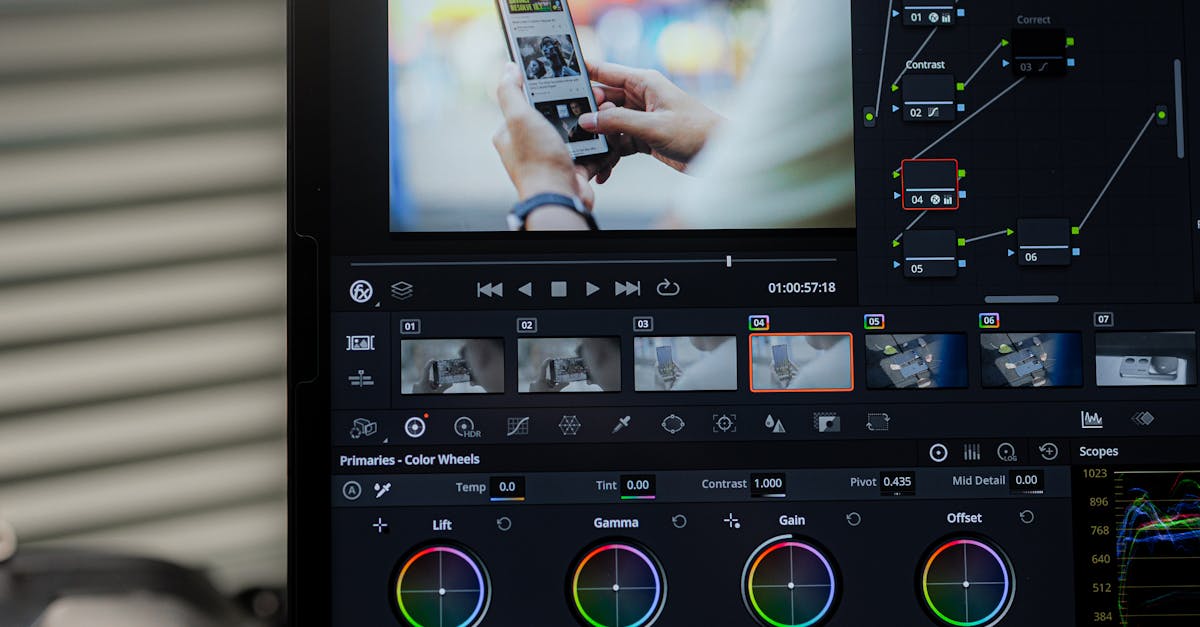

AI creative workflow tools are transforming how professionals approach editing and content creation. These intelligent systems streamline complex processes, reduce manual labor, and enhance creative output. From video editing to graphic design, AI-powered solutions help creatives work smarter, not harder, by automating repetitive tasks and providing intelligent suggestions that elevate the quality of final products.
The Evolution of Creative Workflows
The creative professional’s workflow has always been defined by a fundamental tension between vision and execution. For decades, the path from concept to final product was a marathon of meticulous, manual labor. In the era of physical media, editing was a literal cut-and-paste process; film editors spliced celluloid, graphic artists used waxers and X-Acto knives on boards, and retouching photographs involved dyes, airbrushes, and an immense amount of patience. The editor’s skill was measured not just by their eye, but by their physical dexterity and tolerance for repetitive, painstaking tasks. Every change was permanent, every experiment costly, and iteration was a slow, linear crawl.
The first digital revolution, marked by the advent of tools like Adobe Photoshop, Avid Media Composer, and QuarkXPress in the late 80s and early 90s, was seismic. It shifted the paradigm from physical to virtual, offering the unprecedented power of non-destructive editing and undo. This was a leap from craftsmanship to digital artistry, where layers, filters, and digital effects replaced physical tools. Workflows became faster and more flexible, but a new form of complexity emerged. The software was powerful, yet it required the user to know exactly which tool to use, which slider to adjust, and which sequence of menu commands to execute. The burden of execution, while now digital, remained entirely on the human operator. Productivity gains came from speed and flexibility, not from intelligence within the tool itself.
The integration of automation marked the next subtle shift. Features like batch processing, scripting, and basic templates allowed users to automate repetitive sequences they had explicitly defined. This was helpful, but it was a blunt instrument—the software did exactly what it was told, no more, no less. The true evolution began with the gradual embedding of algorithmic assistance into these digital environments. Early examples included content-aware fill, which used statistical analysis to plausibly patch image gaps, or auto-color correction based on simple white balance algorithms. These were clever tricks, but they operated on a set of predefined rules and often required significant manual fine-tuning.
This sets the stage for the current, transformative phase: the shift from automated tools to intelligent systems. The integration of true artificial intelligence and machine learning represents not just another feature set, but a fundamental re-architecting of the creative workflow. Modern platforms no longer merely respond to commands; they begin to anticipate needs and understand context. The workflow is evolving from a linear, command-driven process into a collaborative dialogue between the creator and an intelligent assistant. The system can now analyze the content within a frame, interpret a rough textual prompt, or recognize the stylistic intent behind a user’s initial adjustments. This evolution moves the creative professional’s role further up the value chain, away from manual execution and toward creative direction and curation. The labor-intensive processes of the past are being streamlined by systems capable of handling complex, subjective tasks that were once the exclusive domain of skilled human eyes and hands.
Core AI Technologies Powering Modern Editing Tools
Building upon the historical shift from manual to digital and then intelligently automated systems, today’s creative tools are powered by a sophisticated suite of artificial intelligence technologies. At their core, these are not monolithic “AI” but specialized architectures designed to understand, interpret, and manipulate creative content. The most transformative advances stem from deep learning, a subset of machine learning that utilizes artificial neural networks with many layers—hence “deep.” These networks are trained on colossal datasets of images, videos, and audio, learning to identify patterns and features that are often imperceptible to human designers.
For visual editing, computer vision algorithms are fundamental. These are deep learning models trained to parse and understand pixel data. When you use an object removal or content-aware fill tool, a convolutional neural network (CNN) analyzes the surrounding textures, lighting, and structures. It doesn’t just copy-paste; it generates plausible pixels to seamlessly reconstruct the background, having learned from millions of similar examples what “should” be there. Automatic color correction employs similar principles, where algorithms analyze the color distribution, skin tones, and scene composition of a reference image or clip, then map those color-grading characteristics onto the target footage through complex transformations.
Natural Language Processing (NLP) bridges the gap between human instruction and machine execution. By interpreting text-based commands like “make the sky more dramatic” or “isolate the subject,” NLP models, often transformer-based, deconstruct the semantic intent. They then translate this into a series of parameters that the visual AI models can execute, creating an intuitive, conversational layer over complex procedural adjustments. This is a leap beyond simple macros, as the system understands context and adjectives.
The most recent revolution is driven by generative AI models, particularly diffusion models and Generative Adversarial Networks (GANs). These systems learn the underlying distribution of data—what makes a photo, a painting, or a video frame—and can create or modify content from noise or simple prompts. In editing, this powers features like generating entirely new backgrounds from a text description, extending a frame beyond its original borders, or even creating synthetic footage elements. These models work in concert with the previously mentioned technologies: computer vision analyzes the existing scene, NLP interprets the creative directive, and the generative model synthesizes new, context-aware content that aligns with the user’s intent. Together, this stack of AI technologies moves the software from a passive tool to an active collaborator, capable of executing nuanced creative tasks by understanding both the content it sees and the outcome the creator desires.
Essential AI Tools for Video Production Workflows
Building directly upon the foundational AI technologies discussed previously, video production workflows are experiencing a profound transformation. The application of machine learning, computer vision, and natural language processing is no longer theoretical; it’s manifesting in tangible tools that dismantle traditional bottlenecks. These platforms move beyond simple automation to offer intelligent assistance, fundamentally altering the editor’s role from manual executor to creative director.
The initial logjam of organizing raw footage is being solved by AI-driven media management. Tools now automatically analyze clips using scene detection, identifying shot changes and categorizing content. More advanced systems employ facial and object recognition, tagging clips with metadata like “Person A,” “outdoor,” or “car.” This allows editors to instantly search their entire library for “all medium shots of the CEO near a whiteboard,” turning days of logging into minutes. Intelligent trimming features can even suggest removing ums, ahs, and silences in interview footage, creating a rough cut in a fraction of the time.
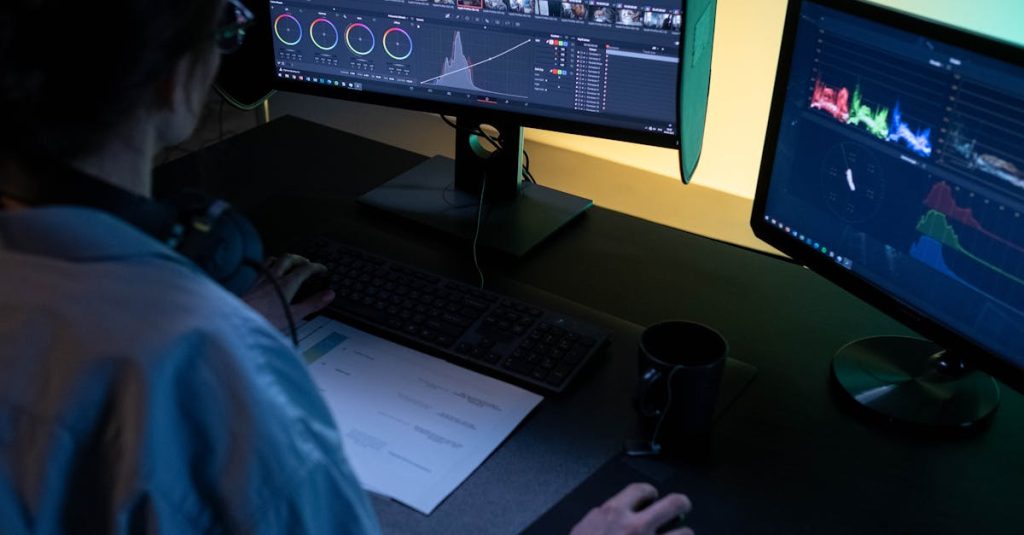
In post-production, AI is delivering consistency and quality at unprecedented speed. Color grading, once a highly specialized and time-consuming craft, is augmented by tools that analyze footage to match shots from different cameras or lighting conditions. They can apply the color palette from a reference image across an entire timeline, ensuring visual coherence. Similarly, motion tracking for visual effects, a frame-by-frame chore, is now handled with robust AI that accurately follows complex movements, allowing artists to focus on the creative integration of effects rather than the tedious tracking process.
Accessibility and refinement are also supercharged. Speech-to-text transcription, powered by natural language processing models, generates accurate captions and subtitles automatically, while also creating a searchable transcript of the video. This enables the revolutionary practice of text-based editing, where editors can delete sentences in a transcript and the corresponding video clips are trimmed in the timeline. For documentary filmmakers, this means quickly finding key moments across hundreds of hours of interviews. For commercial teams, it means rapidly producing multiple cut-downs for different social media platforms from a master edit.
The real-world impact is measurable. A documentary editor can now ingest and thematically organize hundreds of hours of footage in a day. A commercial production house can maintain perfect color consistency across a multi-location campaign shot with various equipment. A corporate video team can produce accessible, captioned content for global audiences almost instantly. These AI tools don’t replace creative vision; they streamline the technical execution, freeing professionals to focus on storytelling, pacing, and emotional impact—the true heart of video production. This shift towards intelligent workflow efficiency seamlessly sets the stage for examining similar revolutions in static visual content, where AI is reimagining the fundamentals of graphic design.
AI Solutions for Graphic Design and Visual Content
Building on the automation of video workflows, the revolution extends powerfully into the static visual realm. For graphic designers and visual content creators, AI is no longer a futuristic concept but a practical co-pilot embedded within the tools they use daily. This shift moves beyond simple automation to augmented creativity, where AI handles the repetitive, time-consuming tasks of execution, freeing the human mind to focus on strategy, concept, and artistic direction.
The foundation of strong design—layout, typography, and color—is now accelerated by intelligent assistants. Platforms like Adobe Sensei and Canva’s Magic Studio analyze design principles and user preferences to suggest harmonious font pairings and dynamic color palettes that align with a brand’s mood or a project’s intent. For layout generation, AI can take a handful of assets and a text brief, then produce multiple composition options that adhere to rules of balance and visual hierarchy. This allows designers to rapidly explore creative avenues that might have taken hours to mock up manually, all while maintaining strict brand consistency through predefined style guides.
Perhaps the most dramatic time-savers are in image manipulation. Intelligent object removal and background replacement tools, such as those in Photoshop or standalone apps like Runway ML, now operate with startling accuracy using a single click or brush stroke. These tools understand context, filling in removed elements with semantically plausible pixels rather than simple clones, making tedious cut-outs and compositing a task of seconds. Similarly, AI-powered upscaling technologies from tools like Topaz Gigapixel use neural networks to intelligently increase image resolution, recovering detail and reducing noise in ways traditional interpolation never could, salvaging low-res assets for professional use.
Furthermore, the entire approach to template-based design is being transformed. AI template generation systems can produce not one, but hundreds of design variations—adjusting layouts, swapping images, and modifying color accents—in the time it takes to brew a coffee. This is invaluable for campaigns requiring multiple asset formats (social posts, banners, print ads) or for A/B testing visual concepts. The designer’s role evolves from executing every single variation to curating and refining the best outputs from the AI, ensuring the final products retain a human touch and strategic alignment. This seamless blend of automated generation and human curation sets the stage for the next critical step: weaving these discrete AI tools into a cohesive, end-to-end creative pipeline.
Integrating AI Tools into Existing Creative Pipelines
Having explored the specific AI tools transforming visual creation, the crucial next step is their seamless integration into established creative pipelines. Successfully embedding these technologies requires a strategic approach that enhances rather than disrupts the creative heartbeat of a team. The first step is a clear-eyed workflow audit. Identify repetitive, time-intensive tasks that require minimal subjective judgment—such as initial asset tagging, rough background removals, generating first-draft copy variations, or resizing assets for multiple platforms. These are your high-impact integration points where AI can immediately reclaim hours for core creative work.
Maintaining creative control is paramount. This is achieved by treating AI as a powerful junior assistant, not an autonomous artist. Establish clear parameters: define brand voice guidelines for copy AI, upload specific mood boards for image generators, and set strict technical specifications for automated tasks. Crucially, implement human-in-the-loop quality checkpoints at every stage. The AI generates options, but the creative professional selects, refines, and imbues the work with strategic intent and emotional resonance. This ensures the output remains aligned with the project’s vision and quality standards.
Compatibility is a practical hurdle. Prioritize tools that offer plugins for your existing software ecosystem, like Adobe Creative Cloud or Final Cut Pro, or those with robust API access for custom pipelines. Training is equally critical; move beyond a simple tutorial. Foster a culture of experimentation by running internal workshops where teams use AI tools on low-stakes projects, sharing their discoveries on effective prompting and workflow shortcuts. This peer-led learning accelerates adoption and reduces anxiety.
The proof is in measurable outcomes. A mid-sized advertising agency integrated an AI copy-and-mood-board tool at the concepting phase, reducing the time from brief to first client presentation by 40%, while delivering more varied creative directions. An independent documentary filmmaker used AI transcription and clip analysis to instantly log hundreds of hours of footage, a task that previously took weeks, allowing them to focus on narrative structure. In both cases, the integration was successful because AI handled the volume, while humans provided the direction, curation, and final polish. This synergy doesn’t replace the creative process; it streamlines its logistics, freeing professionals to focus on the innovation and emotional impact that define truly great work.
Future Trends and Ethical Considerations in AI Creativity
As we move beyond the initial integration phase, the trajectory of AI in creative workflows points toward a future of deeper symbiosis. The tools are evolving from discrete automation points into pervasive, intelligent partners. Imagine a video editor where an AI doesn’t just suggest cuts, but analyzes raw footage in real-time, predicting the editor’s stylistic preferences based on past projects and dynamically organizing clips into a narrative scaffold. This is predictive workflow optimization, where AI anticipates needs, pre-renders effects, and surfaces relevant assets before the creative even asks. Similarly, personalized creative assistants will learn an individual’s unique aesthetic fingerprint—their go-to color palettes, pacing rhythms, or compositional tendencies—to offer suggestions that feel less generic and more like an extension of their own creative intuition.
This shift from tool to collaborator raises profound ethical questions that the industry must confront head-on. The core issue revolves around authorship and originality. When an AI generates a compelling visual concept based on a prompt trained on millions of copyrighted artworks, who owns the output? The legal frameworks are murky, leaning toward the human prompting the system being the author, but this fails to address the foundational use of ingested creative work. Professionals must advocate for and use tools that employ ethically sourced training data and support transparent attribution models. Furthermore, as AI becomes more capable of producing polished final products, the risk of creative homogenization increases. If everyone uses similar prompts and models, distinctive style could be eroded.
Therefore, the critical skill for the future creative will be artistic direction over automation. The value shifts from manual execution to curating, guiding, and infusing AI output with human context, emotion, and intentionality. The balance lies in using AI for the “heavy lifting” of iteration and exploration, freeing the human to focus on high-concept strategy and nuanced emotional resonance that algorithms cannot replicate. This also impacts economics: fair compensation models must evolve to credit the creative’s direction and final refinement, not just the speed of output. Agencies and clients must recognize that AI-assisted work still requires a skilled professional’s vision to transform generated components into meaningful, original art.
Ultimately, the most successful creatives will be those who treat AI not as a replacement, but as a tireless, infinitely knowledgeable junior partner—one that handles vast combinatorial possibilities and technical repetition, while the human provides the irreplaceable spark of taste, cultural understanding, and soul. The future isn’t about humans versus machines; it’s about humans with machines, leveraging this collaboration to push creative boundaries further than ever before, provided we navigate the ethical landscape with as much ingenuity as we apply to the work itself.