
Discover how modern graphic designers are revolutionizing their workflow with one-click image segmentation techniques. This powerful approach transforms complex image editing from hours of painstaking work into instantaneous precision. Learn the secrets that professional designers use to separate subjects from backgrounds, isolate intricate elements, and create stunning compositions with unprecedented efficiency.
The Evolution of Image Segmentation in Graphic Design
The journey from painstaking manual selection to today’s one-click marvels represents a fundamental shift in how graphic designers interact with digital imagery. For decades, the core toolkit was defined by manual and semi-automated selection tools. The lasso tool, requiring a steady hand and pixel-perfect precision, was the primary method for isolating irregular shapes. Its cousin, the magic wand, offered a glimpse of automation by selecting contiguous areas of similar color, but it stumbled miserably on complex gradients, fine details like hair, or low-contrast edges. These tools operated on a simple principle: you, the designer, were the algorithm, manually defining the boundary between subject and background.
The quest for better automation led to more sophisticated interactive methods, such as the pen tool for creating vector paths and later, intelligent tools like “Refine Edge” and “Select and Mask.” These represented a significant leap, using local contrast and edge detection to improve selections made with initial manual input. However, they still required considerable skill and time, treating segmentation as a manual correction process rather than an automatic identification task. Underpinning all these traditional methods is the core concept of binary image processing. At its heart, segmentation is the process of assigning each pixel in a source image to a specific category—typically “foreground” or “background”—to create a distinct mask or matte. Early software attempted this by analyzing simple pixel attributes like color value or brightness, but this binary thinking struggled with the nuanced reality of photographic images.
The true revolution began with the adoption of principles from computer vision and computational photography. This transition moved the focus from how to draw a boundary to how a system can understand an image’s content. Key breakthroughs included more robust statistical models of color and texture, and algorithms that could analyze not just individual pixels, but the context and relationship between pixels across the entire image. Techniques like graph-cut optimization, for instance, allowed software to intelligently determine the most probable boundary between subject and background based on user-provided scribbles, a major step toward automation.
The pivotal technological breakthrough that truly unlocked one-click potential was the integration of machine learning, specifically convolutional neural networks (CNNs). Unlike traditional algorithms following hard-coded rules for edges or color, these networks are trained on millions of images, learning to recognize patterns, objects, and textures intrinsically. They can distinguish a wispy strand of hair from a similarly colored background not by a simple color comparison, but by understanding the semantic concept of “hair” and its visual characteristics. This shift from rule-based processing to predictive, intelligence-based analysis is the cornerstone that allows modern design software to analyze a complex scene and, with a single click, accurately segment a subject, turning what was once a tedious technical chore into an instantaneous creative gateway.
Understanding Modern Segmentation Algorithms and Tools
Following the historical progression from manual tools to computer vision, modern graphic design software now harnesses sophisticated algorithms that operate, to the user, as a single click. This magic is powered by a layered understanding of the image, where different algorithmic approaches work in concert to interpret visual data far beyond simple color matching. At the core lies machine vision, a field of computer science that enables machines to “see” and interpret images by analyzing pixel data to identify patterns, boundaries, and objects.
One foundational approach is threshold-based segmentation. This method converts a grayscale image into a binary map by classifying pixels as either “object” or “background” based on their intensity value relative to a set threshold. While simple and fast, it struggles with complex lighting or low-contrast edges. To address edges directly, edge detection algorithms like Canny or Sobel are employed. These work by identifying sharp discontinuities in pixel intensity, effectively outlining the boundaries of objects. However, edge detection alone often results in fragmented or non-closed contours, requiring further processing.
For more coherent region identification, region-based segmentation techniques are used. These algorithms group adjacent pixels that share similar properties, such as color, texture, or intensity, into contiguous regions. Techniques like region growing or splitting and merging build a structural understanding of the image from the inside out, effectively filling in the areas bounded by detected edges. This combination of edge and region data creates a more robust preliminary mask.
The true revolution in one-click accuracy, however, comes from deep learning and neural network approaches. Convolutional Neural Networks (CNNs) are trained on millions of labeled images, learning to recognize a vast array of objects, textures, and contextual relationships. Unlike rule-based algorithms, a neural network doesn’t just see edges and colors; it understands semantic context—it knows that a pixel belonging to a human hair strand is likely part of a larger subject distinct from a wooded background, even if their colors momentarily align. Modern design tools integrate these approaches into a seamless pipeline: edge detection may provide an initial guess, region analysis refines homogeneity, and a pre-trained neural network makes the final, context-aware decision on pixel classification. This sophisticated orchestration, hidden behind a simple button, transforms a complex raster image into perfectly segmented, editable layers, unlocking a new dimension of creative fluidity for the designer.
Practical Applications in Professional Design Workflows
Building directly upon the algorithmic intelligence discussed previously, the true power of one-click segmentation is realized in its practical application. It transforms from a technical marvel into a daily productivity engine and creative liberator within professional design workflows. The time saved is not merely incremental; it fundamentally reshapes project timelines and opens doors to concepts that were once bottlenecked by tedious manual labor.
Consider the relentless demands of e-commerce. A studio receives hundreds of product shots against varied backdrops. Traditional clipping paths are a time-intensive, costly bottleneck. With one-click segmentation, a designer can isolate a sneaker from a lifestyle shot or a piece of jewelry from a velvet tray in seconds, not hours. This enables rapid, consistent generation of pure white-background catalog images, dynamic 360-degree views, or context-aware placements into lifestyle scenes, all while maintaining pixel-perfect edges around complex materials like fur or transparent plastic.
In portrait and fashion photography, achieving a perfect cut-out for composite work is paramount. Removing a subject from a busy urban street or a detailed natural setting manually is a painstaking exercise in precision. Modern segmentation tools, leveraging the deep learning approaches we’ve explored, can intelligently distinguish between fine hair strands, sheer fabric, and the complex background behind them. This allows for breathtaking compositing—placing a portrait into a dramatic new environment—with a level of realism and detail that preserves the photographer’s artistic intent, making high-end retouching accessible on tighter schedules.
The utility extends beyond objects and people. Extracting text from textured backgrounds—like a logo from a brick wall or a sign from a crowded street—becomes trivial. This is invaluable for rebranding projects, archival work, or creating mock-ups where existing graphical elements need to be repurposed or analyzed. Similarly, for designers in textile and surface design, isolating a specific pattern from a photograph of fabric, wallpaper, or nature is a one-click operation. This extracted pattern can then be seamlessly tiled, recolored, and manipulated, accelerating the inspiration-to-production cycle.
Perhaps most creatively liberating is the ease of object separation for complex composites. A designer can quickly deconstruct a stock photo of a crowded market, isolating individual elements—fruit, baskets, people—with a few clicks. These elements become a library of assets, ready to be reassembled into entirely new, custom illustrations or marketing collages. This capability encourages experimentation, allowing designers to iterate through compositional ideas rapidly without the upfront penalty of manual extraction.
In each case, the leap is not just in speed but in accuracy and creative fluidity. Tasks that were impractical due to budget or time constraints become routine. The designer’s role evolves from executing repetitive manual selections to focusing on higher-order creative decisions, composition, and artistic direction, empowered by a tool that handles the complexity of the visual world with intelligent simplicity.
Mastering Advanced Segmentation Techniques and Best Practices
While one-click segmentation delivers remarkable initial results, true mastery lies in the strategic refinement and integration of these tools into a polished, professional pipeline. The magic isn’t just in the click, but in the expert decisions made before and after it. Begin with intelligent pre-processing. For critical projects, a few seconds spent adjusting levels or applying a subtle high-pass filter to enhance edges can dramatically increase the AI’s accuracy, especially with low-contrast subjects or images with dominant, confusing textures.
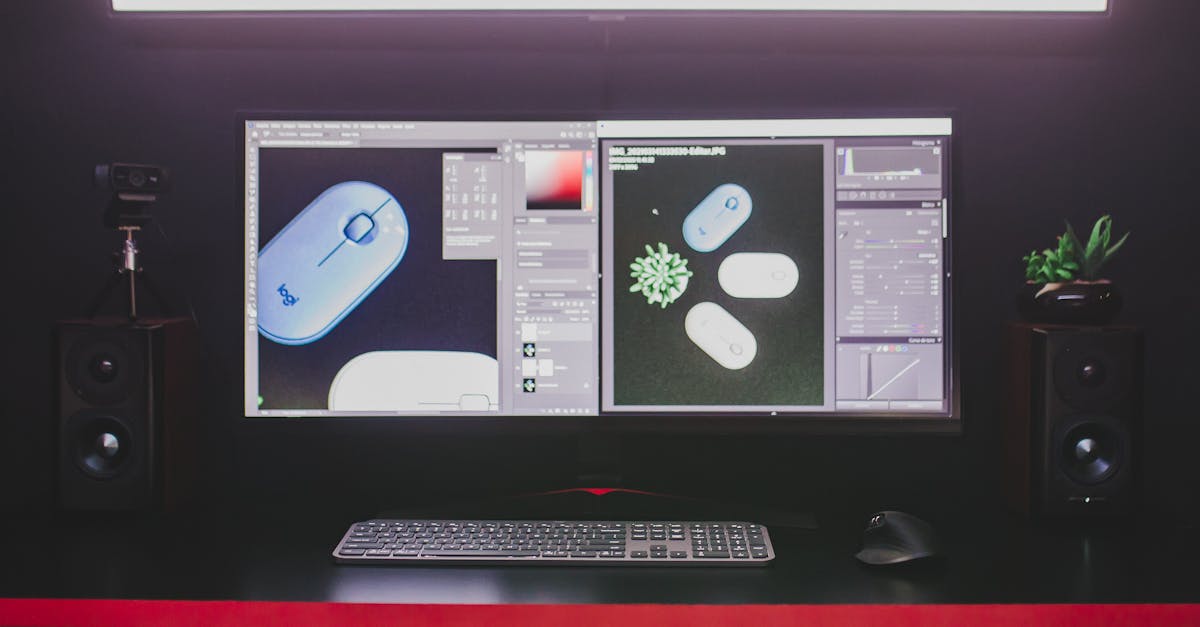
The most powerful technique is viewing the one-click result not as a final mask, but as a 90% complete foundation. This is where manual refinement elevates the work. Use the generated mask as a starting point in your layer panel, then employ the Select and Mask workspace in Photoshop or the Refine Edge brush in other software. Focus manual effort only on the problematic areas—fine hair, semi-transparent fabrics, or intricate overlapping elements like a chain-link fence in front of a subject. This hybrid approach combines AI speed with human precision, ensuring pixel-perfect edges where it matters most.
For challenging images, strategic decomposition is key. If an image contains multiple overlapping objects of similar color, sometimes the best approach is to perform sequential segmentations. First, isolate the entire foreground group from the background. Then, using the new, cleaner isolated group, run segmentation again on individual elements within it. Batch processing is your efficiency engine for uniform projects like e-commerce catalogs. Apply the same segmentation model and refinement steps to an entire folder, but always follow with a systematic quality control pass. Use a checklist: check for halo artifacts, verify edge softness matches the subject, and ensure no critical details were lost.
Integrate these segmented elements seamlessly by maintaining consistency. Create and use libraries of processed cutouts with uniform lighting and shadow treatments. As for the future, anticipate segmentation moving beyond simple foreground/background separation to intelligent attribute-aware masking—where AI can distinguish between different material types (skin, metal, fabric) within a single object and generate appropriate masks for each. Designers can prepare by deepening their understanding of non-destructive, layer-based workflows and by learning to effectively “train” or guide AI tools through iterative feedback, ensuring these advancing technologies remain powerful extensions of creative intent, not replacements for professional judgment.