
Smartphone video recording has revolutionized content creation, but footage often lacks the crisp 4K quality of professional cameras. AI video enhancement tools now bridge this gap, using advanced neural networks to upscale and refine mobile videos. This technology analyzes patterns, textures, and motion to intelligently reconstruct higher-resolution content, transforming ordinary phone footage into stunning 4K visuals that rival professional equipment.
The Evolution of Smartphone Video Capabilities
The journey from the first grainy, postage-stamp-sized mobile videos to today’s fluid 4K footage is a story of relentless miniaturization and computational innovation. Early devices, like the 2003 Sharp J-SH04, captured mere seconds of 144p video. A pivotal leap came with the iPhone 4 in 2010, which popularized 720p HD mobile recording, making smartphone video a mainstream consideration. The push for resolution accelerated rapidly: 1080p became standard, followed by the introduction of 4K recording with devices like the Samsung Galaxy Note 3 in 2013. This was enabled not just by higher-resolution sensors, but by the exponential growth in mobile processing power, like Apple’s A-series and Qualcomm’s Snapdragon chips, which could handle the immense data flow.
However, this race for pixel count often masked fundamental physical constraints. Despite software stabilization, multi-lens arrays, and computational photography tricks like HDR, the smartphone’s tiny image sensor and fixed, miniature optics cannot match the light-gathering capability and optical depth of professional gear. This creates a quality gap—video may be 4K in pixel dimension but can suffer from noise in low light, limited dynamic range, and a lack of true cinematic detail. It is precisely this gap between resolution and richness that modern AI enhancement tools are now designed to address, building upon the hardware foundation laid by decades of mobile evolution.
Understanding 4K Resolution and Its Importance
Building on the evolution of smartphone hardware, understanding the destination—true 4K resolution—is crucial. In consumer terms, 4K primarily refers to Ultra High Definition (UHDTV1) at 3840 × 2160 pixels, offering four times the detail of Full HD. The cinematic standard, DCI 4K, uses a slightly wider 4096 × 2160 pixel frame. This massive pixel count translates to exceptional pixel density, preserving fine details like textures, distant objects, and text even on large screens, creating a profoundly immersive viewing experience.
The core distinction for creators is between native and AI-enhanced 4K. Native 4K means the sensor captures that full resolution directly, gathering maximum light and information. AI-enhanced 4K, however, intelligently upscales lower-resolution footage. While AI can produce stunning results, it is fundamentally reconstructing and inferring detail that was not originally captured by the sensor. For professional applications requiring the highest fidelity for cropping or large-format display, native capture remains superior. However, for social media and most digital platforms, AI-enhanced 4K provides a significant quality leap, making content appear sharper, more detailed, and professionally captured, directly addressing the hardware limitations discussed earlier.
Traditional Upscaling vs AI-Powered Enhancement
For decades, video upscaling relied on mathematical interpolation. Methods like bilinear and bicubic interpolation, or the sharper Lanczos resampling, work by analyzing neighboring pixels to guess the color and brightness of new pixels inserted during enlargement. This is a purely algorithmic process, applying a fixed formula to every image regardless of its content. The core limitation is that these methods cannot create information that wasn’t there originally; they can only stretch and smooth the existing data. The result is often a softer, blurrier image, with noticeable artifacts like jagged edges (aliasing) or ringing around high-contrast areas, as the algorithms struggle with complex textures and fine details.
In stark contrast, AI-powered enhancement represents a paradigm shift from interpolation to intelligent reconstruction. Instead of applying a one-size-fits-all formula, AI uses neural networks—trained on millions of video pairs (low-resolution and corresponding high-resolution)—to understand the content. It learns patterns: what a tree bark texture looks like, how fabric folds, or the structure of a human face. When upscaling, the AI doesn’t just guess pixel values; it synthesizes plausible, high-frequency details based on its learned knowledge. This allows it to reconstruct sharp edges, authentic textures, and nuanced details that traditional methods permanently lose, transforming the process from one of mathematical estimation to one of contextual reasoning and recreation.
How AI Neural Networks Transform Video Quality
At the core of AI video enhancement are sophisticated neural networks, primarily convolutional neural networks (CNNs) and generative adversarial networks (GANs). These systems are trained on colossal datasets containing millions of low and high-resolution video pairs. Through this process, the AI learns complex patterns—like the texture of skin, foliage, or fabric—and the physics of motion, enabling it to intelligently synthesize new visual data rather than just stretching pixels.
For video, maintaining consistency across frames is critical. AI models analyze multiple frames simultaneously in a temporal window, understanding object trajectories and lighting changes to ensure upscaled motion appears natural, not flickering or unstable. Specific techniques are deployed in this analysis:
- Frame Interpolation: AI predicts and generates entirely new frames to increase smoothness.
- Noise Reduction: Neural networks distinguish between grain and true detail, removing the former while preserving the latter.
- Detail Synthesis: Using its learned knowledge, the AI reconstructs plausible high-frequency details, such as sharp edges and fine textures, that never existed in the original low-resolution source.
This multi-faceted, learned approach allows the transformation of smartphone footage into authentic, detailed 4K content.
Leading AI Video Enhancement Tools and Platforms
Building on the neural networks that power the technology, a diverse ecosystem of tools now brings AI video enhancement directly to users. For professionals, Topaz Video AI is a leading desktop application, renowned for its robust models for upscaling, stabilization, and motion interpolation. It operates locally, requiring a powerful NVIDIA or AMD GPU for reasonable processing times, but offers unparalleled control over enhancement parameters. Adobe integrates AI into its ecosystem via Premiere Pro’s Enhance Speech and After Effects’ Super Resolution, providing seamless workflows for Creative Cloud subscribers.
Cloud-based services like AVCLabs Video Enhancer AI and HitPaw Video Enhancer offer accessible alternatives, offloading heavy processing to remote servers, ideal for users without high-end hardware. They typically use credit-based or subscription pricing. For mobile-native workflows, apps like Remini and Video Enhancer AI allow on-device quick fixes, specializing in facial detail and noise reduction, though with less control than desktop counterparts. Compatibility spans common smartphone formats like MP4 and MOV, with outputs typically in 4K H.264 or H.265. Choosing a tool depends on balancing cost, processing power, and the specific enhancement needs of your footage.
Practical Workflow for Enhancing Phone Footage
Having selected your AI enhancement tool, a disciplined workflow is essential. Begin with optimal source footage: shoot in your phone’s highest resolution and bitrate, even if not 4K, to give the AI more data. Stabilize your shots, ensure good lighting, and use a flat color profile if available. This provides a clean, information-rich foundation for the AI to reconstruct.
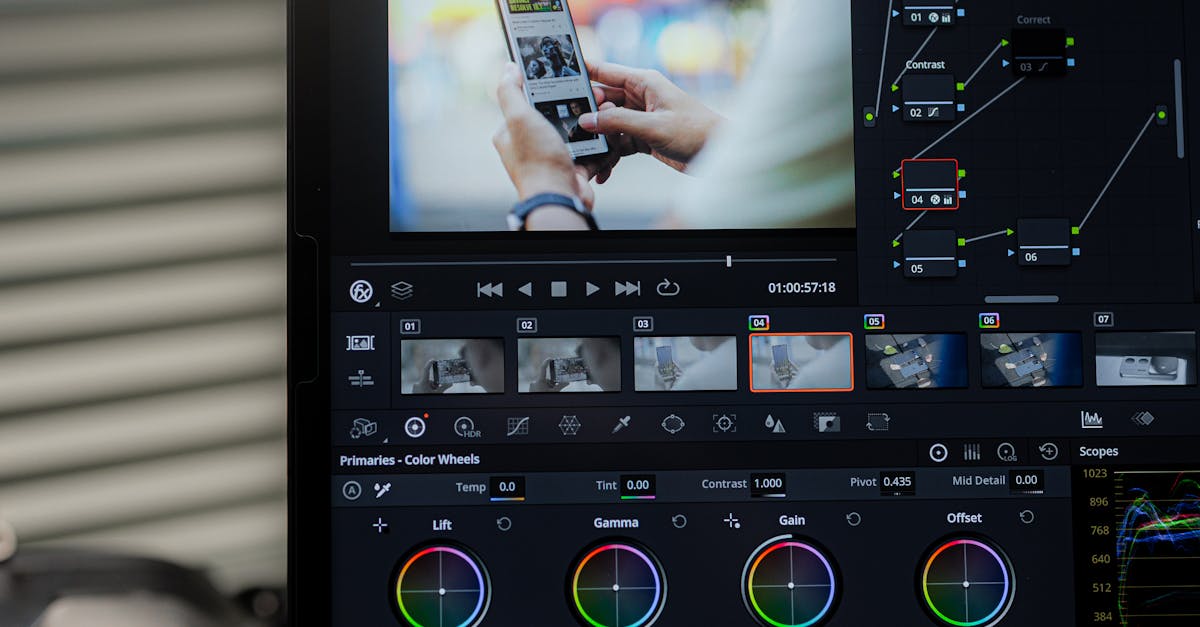
Transfer your files to a capable computer with ample storage. Import footage into your chosen application. The core workflow involves analysis, enhancement, and export. First, let the AI analyze scenes for motion and detail. Then, apply your chosen enhancements: upscaling to 4K, noise reduction, and stabilization. Be judicious; excessive noise reduction can create a waxy “overcooked” look. Use comparison sliders to balance technical improvement with natural texture.
Processing times can be lengthy. Utilize batch processing for multiple clips and consider cloud services for heavy workloads. For export, choose a high-quality 4K codec like H.265 for efficiency, but be mindful of final file size. Always review the enhanced video against your original to ensure the AI has preserved the emotional tone and creative intent of your initial footage.
Real-World Applications and Use Cases
Following the practical workflow, the true power of AI video enhancement is realized in its diverse applications. For content creators, it democratizes high production value. A travel vlogger can shoot spontaneous moments on a phone, then upscale and stabilize clips to seamlessly intercut with drone footage, creating a cohesive 4K narrative. Event videographers can use enhanced smartphone B-roll to supplement primary camera angles, ensuring consistent quality for client deliverables.
Beyond new content, these tools breathe new life into archives. Families can transform grainy, shaky home videos into clear, watchable memories, preserving legacy. Educators and documentary filmmakers can ethically enhance historical footage or interview clips shot on older devices, improving accessibility without reshooting. For small businesses, crisp 4K product demos shot and enhanced on a smartphone eliminate the need for expensive camera rentals.
In each case, the technology bridges a critical gap. It allows the content—the authentic moment, the irreplaceable archive, the compelling story—to take precedence, with AI working to minimize the technical limitations of the capture device. This enables professionals and enthusiasts alike to focus on creativity and narrative, knowing the final presentation can meet modern quality standards.
Limitations and Ethical Considerations
While AI video enhancement unlocks remarkable potential, it is not a magic wand. Its primary limitation lies in the source material. Garbage in, garbage out still applies; footage that is extremely blurry, pixelated, or dark contains insufficient data for the AI to reconstruct accurately. It cannot invent detail that was never captured. Specific artifacts like motion blur from fast movement or heavy digital noise in low light often prove challenging, as the AI may misinterpret them, leading to unnatural textures or “plastic” looking results.
Ethically, the power to alter reality so seamlessly raises significant concerns. In journalism and documentary filmmaking, using AI enhancement without full transparency compromises authenticity and can mislead audiences. The technology’s potential for creating deepfakes or deceptive content is a serious societal risk. Furthermore, enhancing copyrighted footage without permission infringes on intellectual property rights. Professionals must maintain rigorous standards, disclosing the use of AI tools to preserve trust. Understanding these boundaries ensures the technology is used responsibly, as a tool for augmentation rather than deception.
The Future of AI in Video Production
Looking beyond current limitations, the trajectory of AI video enhancement points toward a future of seamless, real-time processing. The next frontier is its direct integration into smartphone hardware, with dedicated neural processing units (NPUs) performing complex upscaling and stabilization as you record. This will blur the line between capture and post-production, enabling in-camera professional-grade results. Advancements in neural architectures, like diffusion models and more efficient transformers, will handle not just resolution but semantic understanding—intelligently reconstructing missing details in motion or poor lighting.
This technology will converge with computational photography pipelines and virtual production, allowing enhanced live footage to interact with CGI environments in real time. Such democratization will inevitably disrupt industries: high-end camera manufacturing may emphasize sensor quality over in-body processing, while traditional post-production services will pivot to overseeing AI-driven workflows and creative direction. Ultimately, the accessibility of pro-quality tools will further empower a new wave of creators, redefining the visual language of everyday content.