
For decades, Nikon and Canon have dominated the DSLR market, creating a rivalry that has shaped modern photography. This definitive comparison examines every critical aspect from sensor technology to lens ecosystems, helping photographers make an informed decision before switching systems. We’ll explore the technical differences, practical considerations, and long-term implications of choosing between these two industry leaders.
Sensor Technology and Image Quality
At the heart of every DSLR is its sensor, the digital canvas that captures light. While both Nikon and Canon have long employed high-quality CMOS sensors, their design philosophies and resulting image characteristics have historically diverged, creating a distinct “look” favored by different photographers. This chapter dissects the sensor technology and image processing that define the Nikon and Canon visual experience.
For years, a key differentiator was dynamic range—the sensor’s ability to capture detail in both shadows and highlights. Nikon, often sourcing sensors from Sony, gained a reputation for superior dynamic range, particularly in their mid-to-high-end models. This allowed Nikon shooters to recover significant shadow detail in post-processing without introducing excessive noise. Canon, designing its sensors in-house, traditionally prioritized exceptional color science and high ISO performance, sometimes at the expense of base ISO dynamic range. However, this gap has dramatically narrowed. Canon’s latest DSLRs, like the EOS 5D Mark IV and the flagship EOS-1D X Mark III, incorporate on-chip Analog-to-Digital conversion and advanced microlens designs that have closed the dynamic range deficit, bringing them to near parity with contemporary Nikon counterparts like the D850 and D6.
Sensor resolution is another battleground. Nikon’s D850, with its 45.7-megapixel backside-illuminated (BSI) sensor, remains a benchmark for high-resolution full-frame DSLRs. The BSI design improves light-gathering efficiency, enhancing low-light performance and sharpness even at such high pixel counts. Canon’s highest-resolution DSLR, the 5DS R at 50.6MP, uses a conventional front-side-illuminated design. While incredibly detailed, it is an older sensor that shows its limitations in dynamic range compared to newer designs. For most current models, both brands offer a sensible spread of resolutions tailored to different needs, from the 20MP sports-oriented cameras to the high-res bodies for landscape and studio work.
Where the character of the image is truly shaped is inside the camera’s brain: the image processor. Nikon’s EXPEED and Canon’s DIGIC engines are responsible for color, contrast, noise reduction, and overall file rendering. Canon’s color science is often praised for producing pleasing, ready-to-use JPEGs with vibrant reds and flattering skin tones straight out of camera. Nikon’s approach has evolved through EXPEED generations to offer incredibly accurate and neutral colors, with many photographers noting a slight preference for Nikon’s rendering of blues and greens. In low-light scenarios, both systems perform exceptionally, but their noise reduction philosophies differ. Canon’s newer DIGIC processors apply aggressive but smart noise reduction at high ISOs, preserving more luminance detail while smoothing chroma noise. Nikon tends to retain a more textured, film-grain-like noise pattern, which some purists prefer for its natural look.
Ultimately, the technical differences translate to a subtle but perceptible aesthetic choice. A Canon file often has a warmer, contrast-rich starting point that excels in portraiture and event photography with minimal editing. A Nikon RAW file frequently provides a flatter, wider canvas with immense malleability in post-production, appealing to landscape and commercial photographers who demand maximum data. The choice isn’t about which is objectively better, but which imaging pipeline aligns with your workflow and visual preference.
Lens Ecosystem and Compatibility
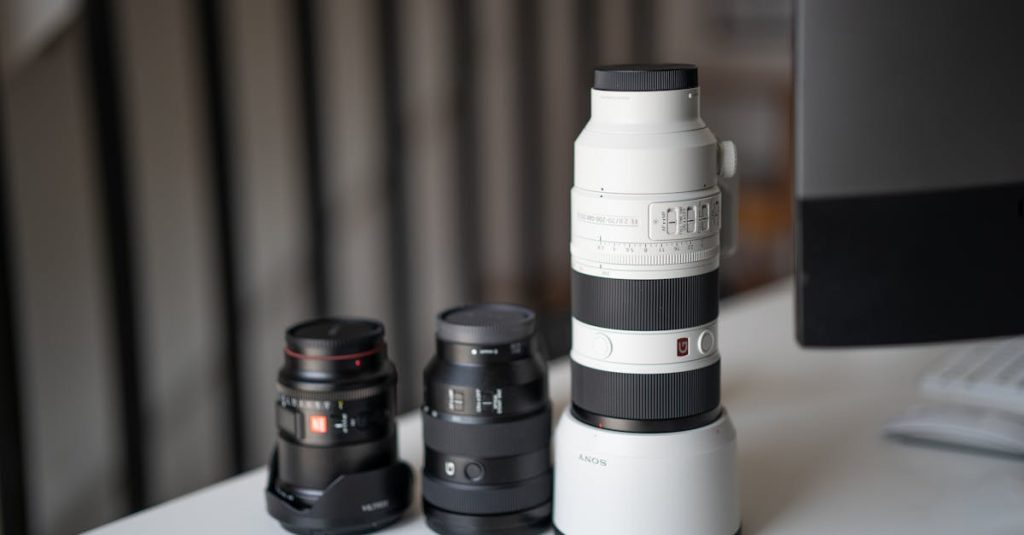
Having dissected the raw image quality from the sensor up, the next critical layer is the glass that projects the world onto that sensor. The lens ecosystem is where a camera system gains its true character and longevity, and for decades, the battle has been defined by Nikon’s F-mount and Canon’s EF mount.
Nikon’s F-mount, introduced in 1959, is a legend for its remarkable mechanical backward compatibility. Its consistent flange distance and physical bayonet mean that even pre-AI lenses from the 60s can mount on a modern DSLR (with severe limitations). This created a vast universe of legacy glass. However, the evolution within the mount, through iterations like AI, AI-S, AF, AF-D, and finally AF-S with built-in motors, means autofocus and metering compatibility varies greatly with older bodies. Canon made a clean, revolutionary break in 1987 with the fully electronic EF mount. Abandoning mechanical linkages for electronic contacts, EF ensured that every EF lens works flawlessly on every EF body, a masterstroke in user-friendly consistency. Their EF-S mount for APS-C sensors shares the same electronic communication but has a smaller image circle and a slightly protruding rear element, physically preventing mounting on full-frame bodies.
In terms of sheer breadth and third-party support, both systems have been exceptionally well-served. You will find Sigma, Tamron, and Tokina lenses for virtually every need. Historically, Canon enjoyed a slight edge in third-party lens availability and first-party specialty lenses like tilt-shifts, but Nikon has closed the gap significantly. In premium “trinity” zooms and fast primes, optical quality is a tie, with differences being model-specific rather than brand-specific. Canon often held a pricing advantage in entry-level lenses, while Nikon’s mid-range zooms were frequently praised for sharpness. A key technical divergence is stabilization: Canon pioneered In-Lens Image Stabilization (IS), placing the stabilizing mechanism in the lens. Nikon, for most of the DSLR era, relied on In-Body Image Stabilization (VR, Vibration Reduction) also within the lens. This meant with Canon, you paid for stabilization per lens, but enjoyed a stabilized viewfinder; with Nikon, you needed to buy VR lenses, but the benefit was seen through the optical viewfinder.
The elephant in the room is the mirrorless transition. This is where your DSLR lens investment faces its most significant fork. Canon’s new RF mount is a second clean break; EF lenses require an adapter for their mirrorless bodies, but they work with full autofocus and stabilization support, making the transition a managed upgrade. Nikon’s new Z mount is larger, but through its FTZ adapter, it maintains full electronic compatibility with virtually all F-mount AF-S and AF-P lenses, again with full functionality. The implication is clear: both companies have created viable bridges for your DSLR lenses. However, the future of new lens development is unequivocally focused on their mirrorless mounts. Investing heavily in new high-end EF or F-mount glass today is investing in a legacy system, albeit one with a reliable adapter path. Your existing lenses, however, are far from obsolete; they become the backbone of a potential hybrid kit, ensuring your hard-earned glass continues to deliver the image quality we explored earlier, even on a new mirrorless chassis.
Autofocus Systems and Performance
Having invested in a robust lens system, as discussed previously, the next critical factor in capturing sharp images is the camera’s ability to use those lenses effectively. The autofocus system is the engine of action photography, and Nikon and Canon have forged distinct paths in this high-stakes arena, each with fervent advocates.
At the heart of their DSLR systems lies the phase-detection autofocus (PDAF) module located at the base of the mirror box. Historically, Canon’s higher-end models have been celebrated for their exceptional tracking consistency and sophisticated algorithms, particularly in the flagship 1D series and prosumer bodies like the 5D and 7D lines. Their systems often feature a high number of cross-type points, which are sensitive to both vertical and horizontal detail, spread widely across the frame. Nikon, particularly from the D5 and D850 generation onward, countered with an overwhelming number of focus points (153 in the D6, with 99 cross-type) and class-leading low-light sensitivity, often rated down to -4.5 EV or lower. This gives Nikon a tangible edge in near-dark conditions where Canon systems might hunt.
For sports and wildlife, the divergence is in the philosophy. Canon’s AI Servo AF tracking is renowned for its smooth, sticky adherence to a subject, with highly customizable tracking sensitivity and acceleration/deceleration settings. It feels predictive and intelligent. Nikon’s 3D Tracking, powered by its high-density AF array and the Scene Recognition System, excels at quickly locking onto and following erratically moving subjects, using color and luminance information. In practice, a Canon might provide smoother panning shots on a predictable athlete, while a Nikon may have the edge on a bird darting through a cluttered forest.
Where Canon has held a more distinct advantage is in live view and video autofocus on DSLRs. Their Dual Pixel CMOS AF technology, available in models like the 5D Mark IV and 90D, provides smooth, fast, and reliable phase-detection autofocus directly on the imaging sensor for both stills and video, complete with responsive face and eye detection. Nikon’s DSLRs, relying on slower contrast-detect AF in live view, cannot compete in this specific domain, a crucial point for hybrid shooters.
In challenging conditions—like a dimly lit theater or a backlit athlete—both systems are powerful but exhibit different characteristics. A Nikon’s low-light AF might acquire initial focus where a Canon hesitates, but the Canon’s algorithm might maintain a more stable lock on a face moving towards the camera. The impact on keeper rates is profound; it often boils down to the type of motion and light. The choice isn’t about which is universally better, but which system’s behavior aligns with your predictive timing and the subjects you chase. This hands-on interaction with the machine leads directly to the next consideration: how the camera’s physical design and interface either streamline or hinder this high-speed photographic dance.
Ergonomics and User Experience
While the autofocus system is the brain that captures the moment, the camera body is the interface through which you command it. Ergonomics and user experience define the tactile relationship between photographer and tool, a factor that often becomes the decisive element in choosing between Nikon and Canon. This chapter delves into the physical and interactive philosophies of these two giants, examining how their design choices translate to real-world handling.
At the core of the experience is body construction and grip. Canon has long been praised for its deeply sculpted, comfortable grips that feel secure even during long sessions, a design language consistent from entry-level to flagship models. Nikon, particularly in its higher-end bodies like the D850 and D6, often employs a taller, more substantial grip that fills the palm differently, which many with larger hands prefer. Both offer exceptional weather sealing in their professional lines, with extensive rubber gaskets and sealed buttons, though the specific sealing thresholds are closely guarded. Enthusiast models see a step-down, with Canon’s xxD series (like the 90D) and Nikon’s D7000-series historically offering robust but not impervious builds.
Button layout and menu logic reveal distinct philosophies. Canon typically favors a more centralized control scheme, with a large rear dial and a top-plate LCD screen on most models, keeping settings visible without draining the main LCD. Their menu system is often described as colorful and icon-driven, aimed at intuitive navigation. Nikon, conversely, is known for its two-command-dial standard (front and rear) accessible in all shooting modes, and a function button ecosystem that allows deep customization. Nikon menus are more text-dense and traditionally organized, which pros appreciate for speed but beginners can find daunting. In recent years, both have excelled in touchscreen implementation, with fully articulating screens on many models, though Canon was an earlier and more consistent adopter of the vari-angle design favored by videographers and travel photographers.
Viewfinder technology sees a key divergence. Canon has steadfastly used an optical pentaprism in its mid-range and professional DSLRs, offering a bright, clear, and lag-free view. Nikon, in models like the D850 and D500, employs a slightly larger magnification pentaprism, but its most notable feature is the optional illuminated grid lines in the viewfinder, a boon for architectural and landscape photographers. For battery life, both companies achieve outstanding CIPA ratings, often exceeding 1000 shots per charge, with Nikon sometimes holding a slight edge in their flagship models due to larger battery capacities. Storage and connectivity are largely parity: dual card slots (CFexpress/XQD and SD, or dual SD) in pro bodies, with robust Wi-Fi, Bluetooth, and GPS options.
Ultimately, the ergonomic choice is deeply personal. Canon’s design often feels immediately welcoming, with a logical flow for those learning photographic principles. Nikon’s interface can feel like a toolkit for technicians, rewarding customization and muscle memory. A wildlife photographer might prefer the thumb-activated AF joystick and deep grip of a Canon EOS-1D X III for hours in a blind, while a studio portraitist might value the dedicated button for flash power on a Nikon D850. Your hand, your shooting style, and how intuitively you can change settings without looking away from the viewfinder will tell you which ecosystem feels like home.